
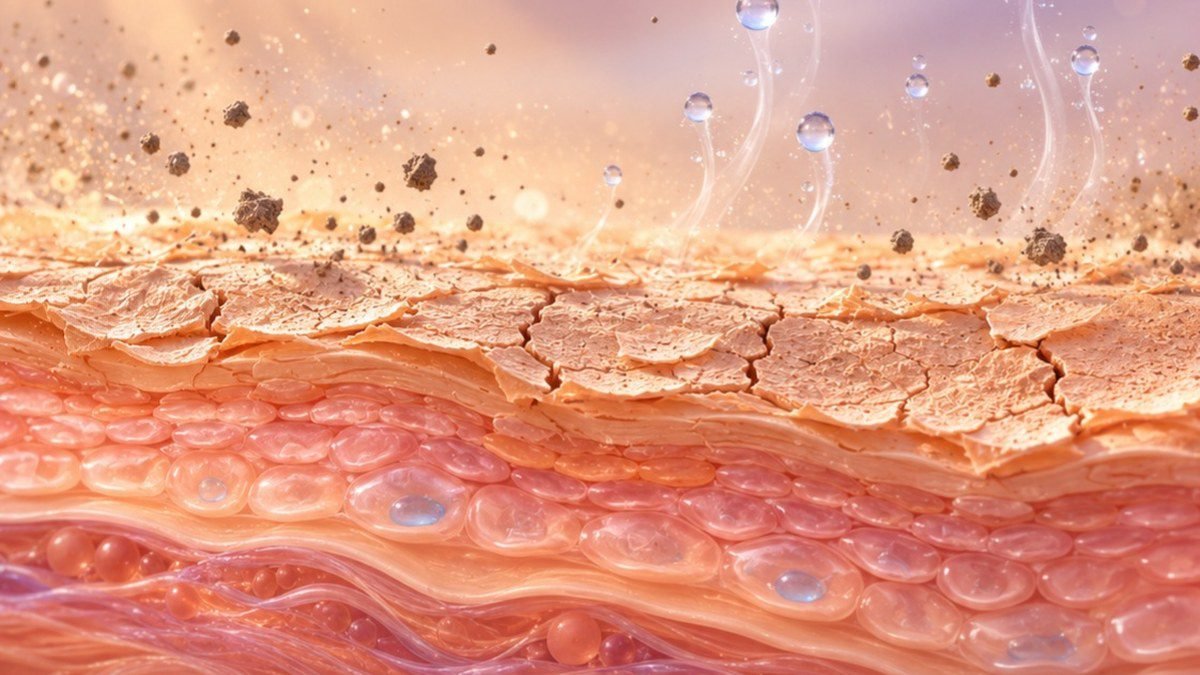
Does your skin feel tight after washing, sting when you apply products that never bothered you before, or look dull and rough no matter how much cream you use? These are classic signs of a weak skin barrier. The good news is that the barrier can recover. This guide explains what the skin barrier is, what damages it, and how to repair your skin barrier with a simple, gentle routine that works for Indian skin and weather.
What is the skin barrier?
The skin barrier is the outermost layer of your skin, called the stratum corneum. Think of it as a brick wall. The “bricks” are flattened skin cells, and the “mortar” holding them together is a mix of natural fats: ceramides, cholesterol and fatty acids.
When this wall is healthy, it does two important jobs:
- It keeps water in, so your skin stays soft, plump and comfortable.
- It keeps irritants out, such as dust, pollution, harsh chemicals and germs.
When the mortar gets weak, small gaps appear. Water escapes faster than usual (dermatologists call this transepidermal water loss), and irritants get in more easily. That is when skin starts to feel dry, tight, rough and sensitive.
Signs your skin barrier is damaged
- Skin feels tight or “stretched” soon after washing.
- Rough, flaky or patchy areas, especially on cheeks, elbows and legs.
- Products that used to feel fine now sting or burn.
- Redness or itching that comes and goes.
- A dull, tired look, because dehydrated skin does not reflect light evenly.
- Skin feels oily on the surface but dry underneath.
What damages the skin barrier?
Most barrier damage comes from everyday habits and weather, not from one big mistake.
- Sun and pollution. UV rays and city dust create stress on the skin surface and leave it looking tanned and dull.
- Dry winter air and heaters. Low humidity pulls water out of the top layer of the skin.
- Very hot water. Long, hot baths dissolve the natural oils that hold the barrier together.
- Harsh cleansers and over-scrubbing. Strong soaps, rough scrubs and washing too often strip the skin.
- Too many active products at once. Layering several strong acids or retinoids can overwhelm the skin.
- Skipping moisturiser. Without a moisturiser, the skin has nothing to help it hold on to water.
How to repair your skin barrier: a simple routine
Repairing the barrier is less about adding more products and more about being gentle and consistent. Here is an easy routine to follow.
1. Cleanse gently
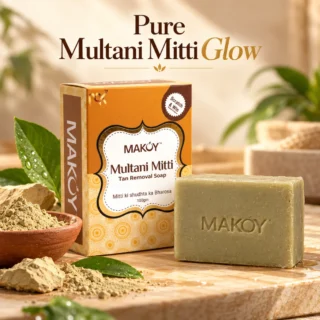
Wash with lukewarm water, not hot. Use a mild cleanser and do not scrub. For the body, a gentle handmade soap that cleans without leaving the skin squeaky works well. Our guide to Multani Mitti soap explains how to use clay-based soap without drying your skin.
2. Moisturise on damp skin
Pat your skin dry with a towel and apply moisturiser within two to three minutes, while the skin is still slightly damp. This locks in the water that is already there. For the body, choose a lotion with rich butters and a humectant such as hyaluronic acid. The MAKOY Moisture Boost Cocoa Body Lotion combines cocoa butter, shea butter, sweet almond oil and hyaluronic acid for this step.
3. Repair at night
Your skin does much of its repair work while you sleep, so night-time is the best moment to support the barrier. Look for a night cream with barrier-friendly ingredients:
- Ceramides replace the “mortar” between skin cells and help reduce water loss.
- Niacinamide (vitamin B3) supports the skin’s own production of ceramides and helps skin look smoother and brighter.
- Soothing ingredients such as aloe vera and allantoin help calm skin that feels sensitive.
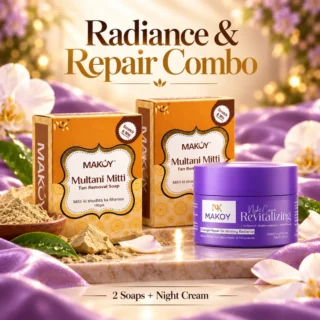
The MAKOY Revitalizing Night Cream is made with a ceramide complex, niacinamide, alpha arbutin, aloe vera and allantoin. Apply a small amount on a clean face and neck before bed. If you also have dark spots, our article on alpha arbutin for dark spots explains how it works at night.
4. Protect during the day
Use sunscreen on your face every morning, even in winter. A healthy barrier recovers faster when it is not under daily sun stress.
5. Keep it simple for a few weeks
Pause harsh scrubs and strong exfoliating acids while your skin recovers. Introduce only one new product at a time so you can see how your skin reacts.
How long does it take to repair the skin barrier?
Your outer skin layer renews itself roughly every four weeks, and this slows down a little with age. Many people notice that their skin feels more comfortable within one to two weeks of a gentle routine, but give it at least four weeks of consistent care before you judge the results. That is why we designed our 30-Day Skincare Combo (Multani Mitti soaps, Revitalizing Night Cream and Moisture Boost Body Lotion) as a full month routine: cleanse in the morning, moisturise after your bath and repair at night.
Skin barrier mistakes to avoid
- Washing your face too often. Twice a day is enough for most people.
- Very hot showers. Keep the water warm and the shower short.
- Scrubbing flaky skin hard. It removes flakes but damages the barrier further.
- Using many strong actives together. More is not better when the barrier is weak.
- Changing products every week. The barrier needs time and consistency.
Frequently asked questions
Can oily skin have a damaged barrier?
Yes. Oily skin can still be dehydrated and sensitive. Use a light, non-greasy moisturiser instead of skipping it, and avoid harsh cleansers that strip oil completely.
Is niacinamide good for a damaged skin barrier?
Niacinamide is generally well tolerated and helps support the barrier. Start with a product that contains it as part of a moisturiser or night cream rather than a very strong serum.
Should I stop using all my skincare products?
You do not need to stop everything. Keep a gentle cleanser, a moisturiser and sunscreen, and pause harsh scrubs and strong exfoliants until your skin feels comfortable again.
When should I see a dermatologist?
If your skin is cracked, bleeding, very red, swollen or itchy, or does not improve after a few weeks of gentle care, please see a dermatologist. These can be signs of conditions such as eczema or dermatitis that need medical treatment.
The bottom line
A damaged skin barrier shows up as tightness, roughness, sensitivity and dullness. Sun, pollution, dry air, hot water and harsh products are the usual causes. To repair your skin barrier, cleanse gently, moisturise on damp skin, use a night cream with ceramides and niacinamide, protect your skin from the sun and stay consistent for at least four weeks. For an easy start, try the MAKOY 30-Day Skincare Combo.




Leave a Reply