
Dark spots are one of the most common skin worries in India. A pimple heals and leaves a brown mark behind. Months of sun on the cheeks leave uneven patches. Sometimes the skin around the mouth or on the forehead simply looks darker than the rest of the face. If you have started reading skincare labels, you have probably seen one name again and again: alpha arbutin.
This guide explains, in plain language, what alpha arbutin is, how it works on dark spots, how long it realistically takes, and how to use it safely in an Indian routine.
What are dark spots, really?
Your skin makes a pigment called melanin. It is your body’s natural protection against the sun. When skin is irritated, inflamed or exposed to a lot of sun, it can make extra melanin in one area. That extra pigment sits in the skin as a darker patch. Dermatologists call this hyperpigmentation.
The most common types in Indian skin are:
- Post-acne marks: brown or dark marks left after a pimple heals.
- Sun spots and tanning: uneven darkening on cheeks, nose and forehead from regular sun exposure.
- Patchy, uneven tone: areas around the mouth, eyes or jaw that look darker than the rest of the face.
Because Indian skin naturally has more active melanin, these marks form easily and can take longer to fade. That is why the right ingredients, used patiently, matter so much.
What is alpha arbutin?
Alpha arbutin is a skincare ingredient related to a compound found naturally in plants such as bearberry. In skin, melanin is made with the help of an enzyme called tyrosinase. Alpha arbutin works by slowing down this enzyme, so the skin makes less excess pigment in the areas where it is overactive.
In simple words: alpha arbutin does not bleach or peel your skin. It gently reduces the extra pigment your skin is making, so over time dark spots look lighter and your overall tone looks more even.
Why it is popular for Indian skin
- Gentle: it is generally well tolerated and is not known for the stinging or peeling that strong acids can cause.
- Targets the cause: it works on the pigment-making process, not just the surface.
- Works well with others: it pairs nicely with niacinamide, which helps reduce how pigment moves to the skin surface and also supports the skin barrier.
One honest note: alpha arbutin is not a “fairness” ingredient and it will not change your natural skin colour. Its job is to make uneven spots and patches look more even with the rest of your skin.
Why use it at night?
During the day, your skin is busy dealing with sun, heat, dust and pollution. At night, it gets a chance to rest and repair. Applying a night cream with spot-care ingredients before sleep means the product stays on your skin for longer, without sweat, sunscreen layers or makeup on top. A night routine is also easier to stay consistent with, and consistency is the real secret with dark spots.
How long does it take?
Pigment fades slowly because skin renews itself slowly. Most people need 6 to 12 weeks of regular, daily use before they notice dark spots looking lighter. Deeper or older marks can take longer. If any product promises to remove dark spots in 7 days, be careful: that is not how skin works.
A simple night routine for dark spots
- Cleanse: wash your face with lukewarm water and a gentle cleanser to remove sunscreen, sweat and dust.
- Pat dry: use a soft towel and pat, do not rub.
- Apply the night cream: take a pea-sized amount, dot it on forehead, cheeks, nose and chin, and spread it gently in upward strokes. Include the neck.
- Sleep: let the cream work overnight. Use a clean pillow cover a few times a week.
The step most people skip: sunscreen in the morning
Even the best night cream cannot keep up if your skin keeps getting fresh sun damage every day. Sun is the biggest trigger for dark spots in India. In the morning, wash your face and apply a broad-spectrum sunscreen of SPF 30 or higher, especially if you are going outside or sitting near a window. Reapply if you are in the sun for long. Without this step, spots tend to come back.
Other habits that help
- Do not pick or squeeze pimples; it makes marks darker and longer-lasting.
- Avoid harsh scrubs. Scrubbing irritated skin can create more pigment, not less.
- Keep skin moisturised. A healthy skin barrier heals marks better.
- Be patient and use your products every day rather than switching often.
Our pick: MAKOY Revitalizing Night Cream
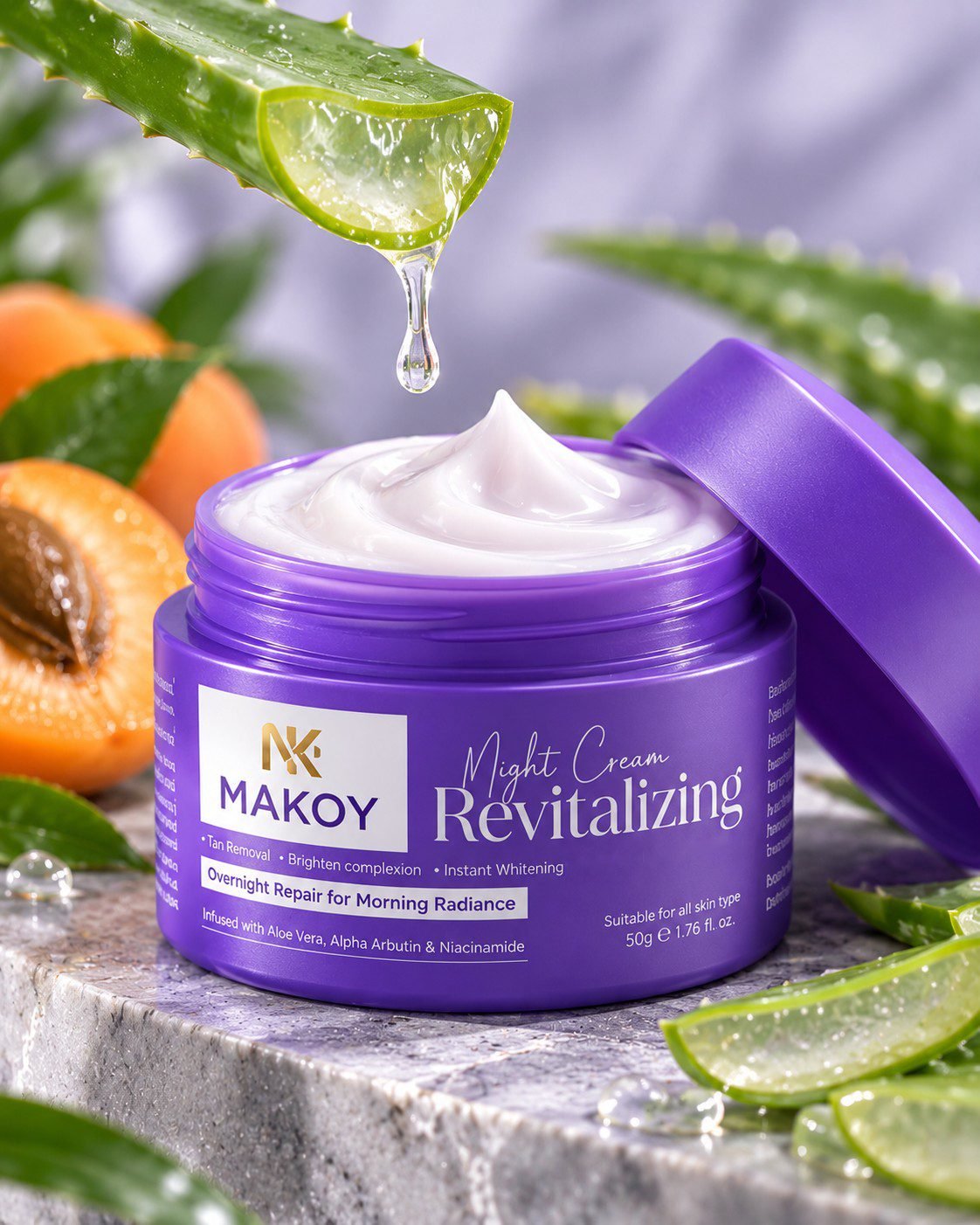
We made the MAKOY Revitalizing Night Cream for exactly this kind of everyday night routine. Its key ingredients include:
- Alpha Arbutin: helps dark spots and uneven tone look lighter over time.
- Niacinamide: helps dull skin look fresher and more even, and supports the skin barrier.
- Ceramide Complex: helps keep the skin barrier strong so skin stays comfortable and hydrated.
- Aloe Vera Extract and Vitamin E: soothing and nourishing.
- Apricot Oil and Allantoin: help keep skin soft and smooth.
It has a light texture that does not feel sticky, and it is suitable for both women and men. Use it every night after cleansing, pair it with sunscreen in the morning, and give it a few weeks of consistent use.
When to see a dermatologist
If a dark patch is growing quickly, changing shape, itching, bleeding, or if your pigmentation is widespread (for example, melasma that keeps coming back), please see a dermatologist. Some conditions need prescription treatment, and a doctor can guide you best.
Quick summary
- Dark spots are extra melanin in one area, triggered by sun, pimples and irritation.
- Alpha arbutin gently slows down pigment production, so spots look lighter over time.
- Use it at night, every night, and expect visible change in 6 to 12 weeks.
- Daily sunscreen is essential, or spots come back.
Have a question about your skin? Write to us at care@makoy.in. And if you want simple skincare tips in your inbox, join our free newsletter at the bottom of this page.





Leave a Reply