
Niacinamide is on almost every skincare label in India right now, usually next to a percentage that is supposed to impress you. It is a genuinely useful ingredient — and also one that gets credited with things it does not do.
What it is
Niacinamide is a form of vitamin B3. Unlike a lot of trendy ingredients, it is well studied, stable, water-soluble, and tolerated by most skin types. That combination is rare, and it is the main reason formulators like it.
What it genuinely does
- Supports the skin barrier. It helps skin produce ceramides, the lipids that hold the barrier together. A stronger barrier loses less water, which shows up as skin that feels less tight.
- Helps regulate oil. Several studies have found reduced sebum production with regular use. In practice: less midday shine, not zero oil.
- Evens out tone. It interferes with the transfer of pigment to surface skin cells, which over weeks makes dark marks and patchiness less obvious.
- Calms redness. It has anti-inflammatory effects, which is why it appears in products for reactive skin.
- Plays well with others. It does not need a special routine built around it.
What it does not do
- It does not change your natural skin colour. Nothing applied to skin does.
- It does not clear moderate or severe acne on its own.
- It does not work in three days. Barrier and oil changes take two to four weeks; tone takes six to twelve.
- It does not remove deep wrinkles.
The percentage question
You will see 2%, 5%, 10% and occasionally 20% on labels. Most of the published benefits show up somewhere between 2% and 5%. Higher is not automatically better — above 10%, more people report tingling and irritation without a matching gain.
A well-formulated 4% will usually serve you better than a poorly formulated 12%. The number on the front is the easiest thing to print and the least useful thing to compare.
When to use it
Either time of day works. Night is a sensible default: cell turnover peaks while you sleep, and water loss through the skin is highest then, so a barrier-supporting ingredient has the most to do.
Apply to slightly damp skin after cleansing, and give it six weeks before you decide anything.
Who should be careful
Most people tolerate it well. If your skin is highly reactive, start every other night. If you get flushing or tingling that does not settle within a couple of minutes, the concentration is too high for you. And as with any new product, patch test on your inner arm first.
Where it is in our range
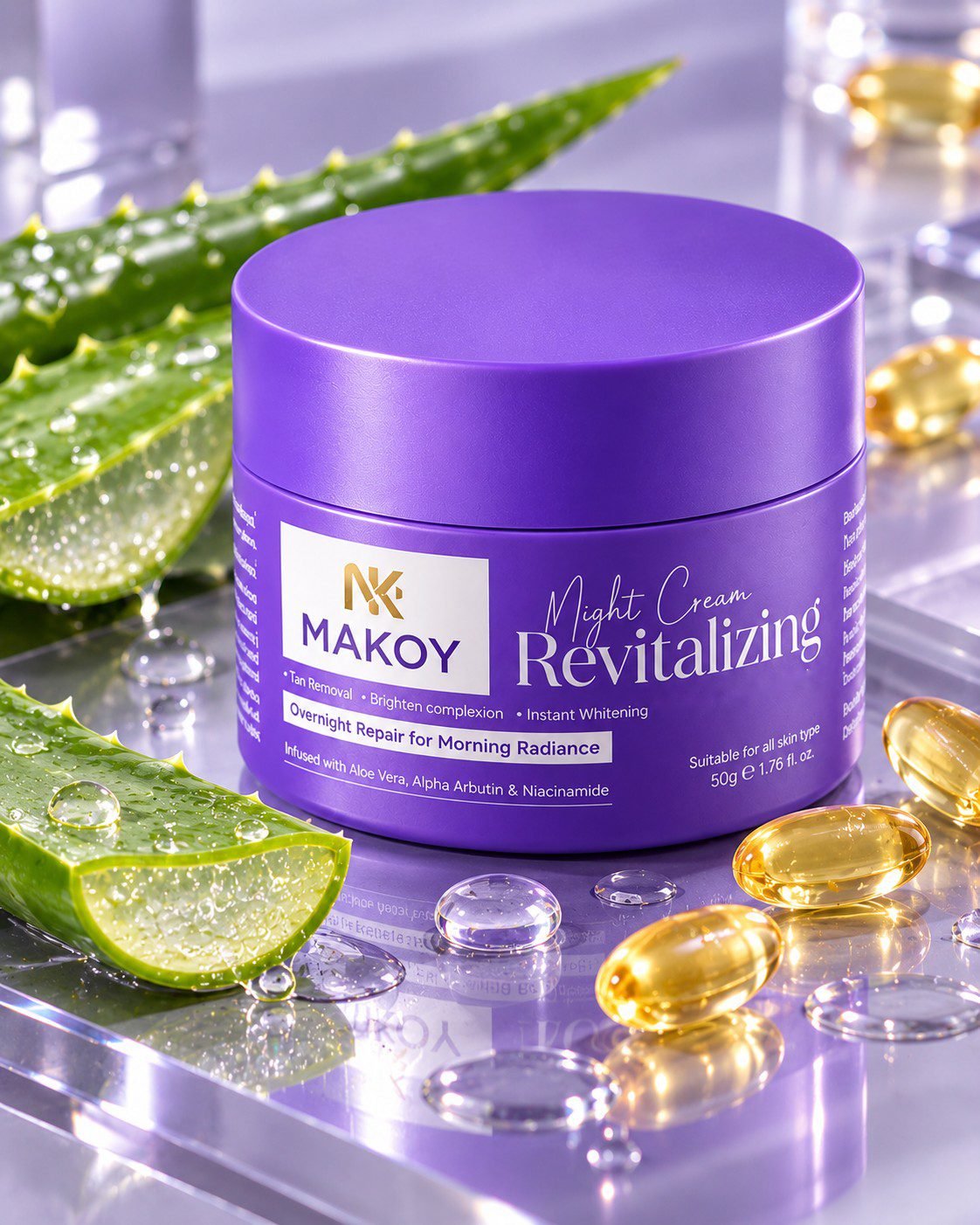
Our Skin Renew Night Cream is built around niacinamide with aloe vera, for exactly the slot described above — overnight barrier support, hydration and gradual brightening. We did not put it in the soap, because an ingredient that gets rinsed off in thirty seconds has very little chance to do anything.
If dullness or uneven tone is what brought you here, the full routine is on our dull and uneven skin page. If it is oil and breakouts, see oily and acne-prone skin.
Common questions
Can I use niacinamide with vitamin C?
Yes. The old warning about the two cancelling each other out came from research at high heat that does not reflect normal use.
Morning or night?
Either. Night if you want a simple rule.
How long before I see results?
Oil and barrier: two to four weeks. Tone and marks: six to twelve weeks.
Is it safe for sensitive skin?
Generally yes, at lower concentrations. Start slowly and patch test.
If you want a simple place to start, our handmade multani mitti soap is the one bar most Makoy customers begin with.






Leave a Reply