
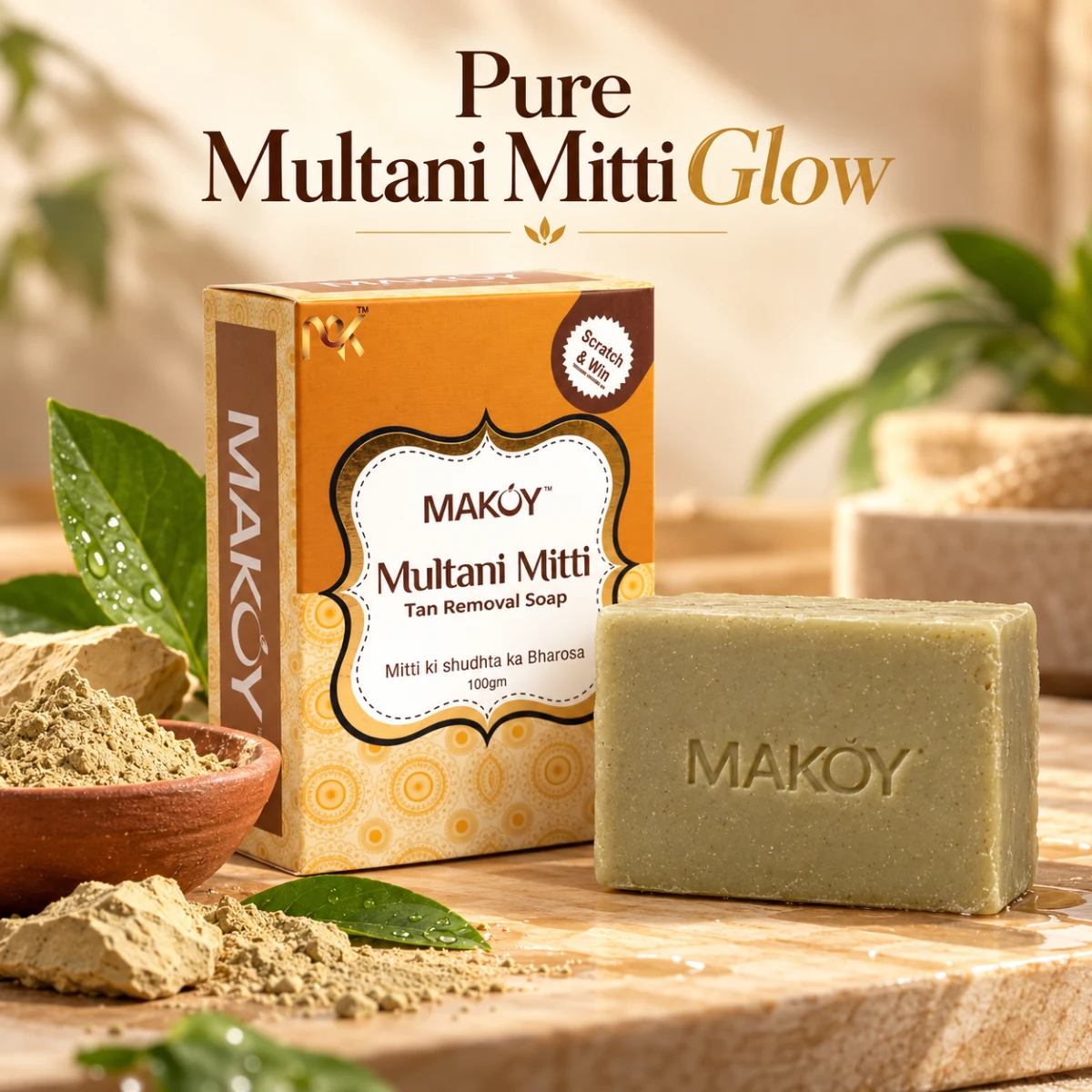
Walk into any Indian store and the natural soap shelf offers you the same three options: Multani Mitti, neem, and activated charcoal. All three are marketed at oily and acne-prone skin, which makes them look interchangeable. They are not.
The short version
- Multani Mitti — absorbs oil, mild polish, gentle enough for daily use. Best all-rounder for oily and combination skin.
- Neem — traditionally used for its antibacterial reputation. Can be drying, and the smell is not for everyone.
- Charcoal — strong oil absorption, often the harshest of the three. Good occasionally, rough as a daily cleanser.
Multani Mitti (fuller’s earth)
What it is: a naturally occurring clay, mostly hydrated aluminium silicates with magnesium, calcium and silica.
What it does: the clay particles have a large surface area and a slight negative charge, so they pull in sebum and loose surface debris rather than sliding over them. The fine particles also give a soft, non-abrasive polish.
Best for: oily skin, combination skin, humid cities, anyone who sweats through the day. Mild enough that most people can use it twice daily.
Watch out for: if your skin is genuinely dry, daily use on the face may be too much. Body use is still fine.
Neem
What it is: oil or extract from the neem tree, used in Indian households for generations.
What it does: neem has a long traditional reputation for antibacterial and anti-inflammatory properties, and there is laboratory research on neem extracts. How much of that survives into a bar of soap that sits on your skin for thirty seconds is a fair question, and the honest answer is: less than the marketing suggests.
Best for: people who like it and whose skin agrees with it. Some find it genuinely helpful for body acne.
Watch out for: many neem soaps are built on harsh bases and end up drying. And the smell is distinctive — you either don’t mind it or you really do.
Activated charcoal
What it is: carbon processed to be extremely porous, which is why it turns up in water filters.
What it does: that porosity absorbs oil very effectively — often more aggressively than clay.
Best for: very oily skin, or occasional use when skin feels congested.
Watch out for: “more absorbent” is not automatically better. Used daily, charcoal soap leaves a lot of people tight and flaky, and tight skin often rebounds with more oil. Many charcoal bars also add coarse exfoliating particles, which is a lot of friction for facial skin.
How to choose
- Oily or combination skin, daily cleanser: Multani Mitti. It does the main job without the harshness.
- Body acne, and neem agrees with your skin: neem on the body, clay on the face.
- Very oily skin that clay alone does not handle: clay daily, charcoal once or twice a week.
- Dry or sensitive skin: none of these three as a daily face wash. A gentle cream cleanser suits you better.
The thing that matters more than which one you pick
Whichever bar you choose, what you do after it matters at least as much. Lukewarm water instead of hot. No scrubbing. And a moisturiser within a minute of patting dry — on damp skin, not dry. Most “this soap dried me out” complaints are really “I washed with hot water and skipped moisturiser”.
Where ours fits
We make one soap, not five, and it is Multani Mitti — handmade in small batches with natural clay and plant oils, no artificial colour, no harsh detergents. We picked clay because it suits the most people for daily use, not because it is trendy.
If you want the detail on what the clay does, read Multani Mitti soap benefits. If you are choosing based on your skin type, our pages on oily and acne-prone skin and dry skin lay out the full routine for each.
Common questions
Can I alternate between two of them?
You can, but then you will never know which one is working. Pick one, give it four weeks, then judge.
Is charcoal soap bad for skin?
Not bad — just strong. Occasional use is fine; daily use is too much for most people.
Which is best for pimples?
For everyday small pimples and blackheads, a clay soap used consistently plus a moisturiser is a sensible starting point. For persistent or painful acne, see a dermatologist — no soap is the answer there.
Do natural soaps expire?
Handmade soap keeps well if stored dry. Keep it on a draining dish, out of the shower spray, and it lasts far longer.


Leave a Reply