
Your skin feels tight right after you wash your face. Your cheeks get rough and flaky the moment winter arrives, and moisturiser seems to disappear within an hour. If this sounds familiar, the problem may not be a lack of cream but a weak skin barrier. One of the most important parts of that barrier is a group of fats called ceramides. Here is what ceramides for skin actually do, how to tell your barrier needs support and how to add them to a simple routine.
What are ceramides?
Ceramides are lipids, a type of natural fat, found in the outermost layer of your skin. Think of your skin’s surface as a brick wall: the skin cells are the bricks, and ceramides, along with cholesterol and fatty acids, are the mortar that holds them together. Ceramides make up a large share of that mortar, which is why skin experts talk about them so often.
When this layer is full and healthy, it does two jobs. It keeps water inside your skin, and it keeps irritants such as dust, pollution and harsh cleansers from getting in easily. When ceramide levels drop, the mortar develops gaps. Water escapes faster and your skin becomes more sensitive.
Signs your skin may be low on ceramides
- Your skin feels tight or stretched after washing.
- You notice rough, flaky patches, especially on cheeks, elbows and knees.
- Moisturiser feels like it vanishes quickly and you need to reapply often.
- Products that never bothered you before now sting or feel uncomfortable.
- Your face looks dull and uneven even when you sleep well.
These signs often get worse in winter, after a lot of sun exposure or when you over-scrub your skin.
Why ceramide levels drop
1. Dry winter air
In much of North India, winter brings low humidity, cold mornings and heaters indoors. Dry air pulls moisture out of the skin, and a stressed barrier struggles to hold on to it.
2. Hot showers and harsh soaps
Very hot water and strong, foamy cleansers can strip away the natural lipids on your skin’s surface, including ceramides. That squeaky-clean feeling is often a sign that too much has been washed away.
3. Over-exfoliation
Scrubbing every day or stacking several active products can wear down the barrier faster than it can repair itself.
4. Sun, pollution and age
UV exposure and pollution add daily stress to the barrier. Natural ceramide levels in the skin also tend to decline gradually with age, so skin may need more support over time.
What ceramides do for your skin
Lock in moisture
Ceramides help seal the gaps between skin cells so water stays in. That is why ceramide-based moisturisers are often recommended for dry, dehydrated skin.
Support a stronger barrier
Topical ceramides help replenish the lipids your barrier is missing. With regular use, skin tends to feel more comfortable and less reactive.
Soften rough, dry patches
When the surface holds water better, it looks smoother and feels softer to the touch.
Help your skin look healthier
Well-hydrated skin reflects light more evenly, so it can look brighter and less tired. Ceramides do not lighten skin or change your skin colour; they simply help your skin stay in good condition.
Ingredients that work well with ceramides
Ceramides work best as part of a team. Look for them alongside:
- Humectants such as glycerin and hyaluronic acid, which draw water into the skin.
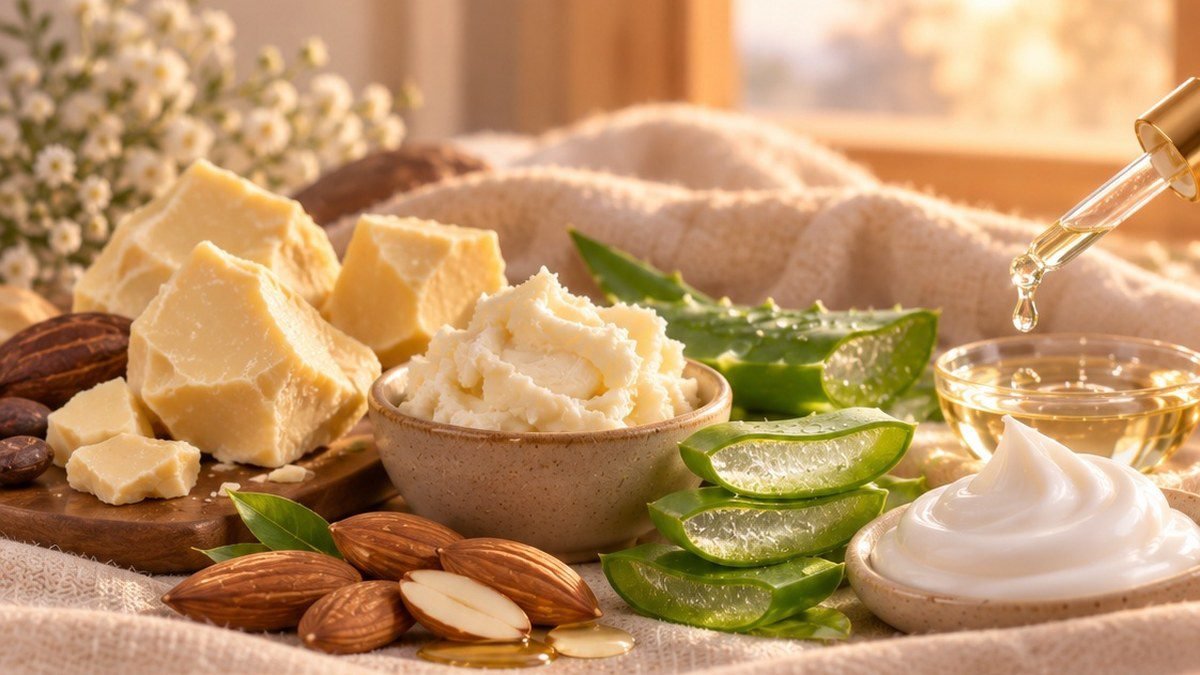
- Emollients and butters such as shea butter, cocoa butter and plant oils, which soften the surface and add a protective layer.
- Niacinamide, which is widely used to support the barrier and improve the look of uneven tone.
- Soothing ingredients such as aloe vera and allantoin, which calm skin that feels irritated.
To understand the full picture, read our guide on how to repair your skin barrier.
A simple ceramide routine for winter
Morning
- Rinse or cleanse gently with lukewarm water, not hot.
- Apply a light moisturiser while skin is still slightly damp.
- Finish with sunscreen on your face and any exposed skin, even on cloudy days.
After your bath
Your body loses moisture too. Smooth a rich body lotion onto slightly damp skin, paying extra attention to elbows, knees and shins. The MAKOY Moisture Boost Cocoa Body Lotion combines Ceramide and Vitamin E with Cocoa Butter, Shea Butter, Sweet Almond Oil and Hyaluronic Acid, and absorbs quickly without a sticky film.
Night
- Cleanse away sunscreen, dust and oil.
- Massage a small amount of night cream onto your face and neck using upward strokes.
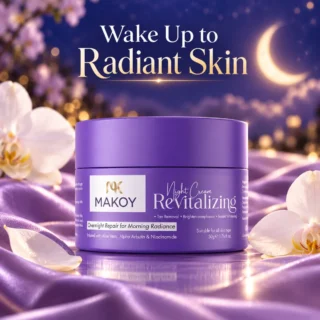
Night is when your skin does much of its repair. The MAKOY Revitalizing Night Cream contains a Ceramide Complex along with Niacinamide, Alpha Arbutin, Aloe Vera and Allantoin, in a non-greasy texture that will not leave residue on your pillow. For more winter tips, see our winter skincare routine for dry skin.
Common mistakes to avoid
- Using very hot water. It feels good in winter but strips the barrier. Keep it lukewarm.
- Scrubbing too often. Once or twice a week is plenty for most people, and less if your skin feels sensitive.
- Skipping moisturiser on oily skin. Oily skin can still be dehydrated. Choose a lighter, non-greasy formula instead of skipping it.
- Applying to completely dry skin. Moisturisers work better on slightly damp skin because they help trap that water in.
- Expecting overnight miracles. Barrier repair takes consistent care, usually a few weeks.
Frequently asked questions
Are ceramides good for oily skin?
Yes. Ceramides are part of every skin type’s natural barrier. Oily and acne-prone skin can also be dehydrated, especially if you use drying products. Choose a lightweight formula.
Can I use ceramides every day?
Yes. Ceramides are gentle and suit daily use, morning and night.
Can I use ceramides with niacinamide or other actives?
Yes. Ceramides pair well with niacinamide and hyaluronic acid, and they can help balance the dryness some active ingredients cause.
How long does it take to see a difference?
Many people notice their skin feels more comfortable within a few days, but rebuilding a stressed barrier usually takes a few weeks of consistent care.
When should I see a dermatologist?
If your skin is cracked, bleeding, very itchy or inflamed, or dryness does not improve after a few weeks of gentle care, consult a dermatologist. Conditions such as eczema need proper diagnosis and treatment.
The bottom line
Ceramides are the glue that keeps your skin barrier strong. When levels drop, especially in dry winter weather, skin feels tight, rough and sensitive. Gentle cleansing, lukewarm water and moisturisers with ceramides, humectants and butters can help your skin hold on to moisture again. For an easy start this winter, use the MAKOY Revitalizing Night Cream on your face at night and the Moisture Boost Cocoa Body Lotion on your body after every bath. Patch test before first use if you have sensitive skin.




Leave a Reply