
You look in the mirror and notice it again: a darker patch on the cheeks, a shadow around the mouth, a few marks left behind by old pimples, and a forehead that looks a shade different from the rest of your face. If that sounds familiar, you are dealing with uneven skin tone, one of the most common skin concerns in India.
The good news is that uneven tone is usually not a sign that something is wrong with your skin. It is your skin reacting to sun, heat, friction, dryness and old breakouts. In this guide we look at why it happens, why it can look worse in winter, and a simple night-time routine that helps your skin look more even over time.
What is uneven skin tone?
Uneven skin tone simply means that the colour of your skin is not the same everywhere. Some areas look darker, duller or more patchy than others. It can show up as:
- Dark spots and marks left after acne heals
- Patchy, darker areas on the cheeks, forehead or upper lip
- Darker skin around the mouth, chin or under the eyes
- A tan line on the face, neck or hands that refuses to fade
- Overall dullness, where the skin looks tired and lacks glow
Most of this comes down to melanin, the natural pigment that gives your skin its colour. When certain areas make more melanin than others, those areas look darker. Your skin is not damaged; it is simply protecting itself, a little too enthusiastically in some spots.
What causes uneven skin tone?
1. Sun exposure
Sunlight is the biggest trigger. UV rays tell the skin to make more melanin to protect itself, and that extra pigment does not always spread evenly. Daily commutes, school runs and time on the terrace all add up, even in winter when the sun feels gentle.
2. Marks left behind by acne
When a pimple heals, it often leaves a flat brown or dark mark behind. These marks can stay for weeks or months, especially if the pimple was picked or squeezed.
3. Dryness and a weak skin barrier
Dry, flaky skin reflects light unevenly, so it looks duller and patchier than it really is. In winter, cold air, hot showers and room heaters pull moisture out of the skin, and the surface starts to look rough and uneven.
4. Friction and irritation
Rubbing your face with a towel, harsh scrubs, tight masks and constant touching can irritate the skin. Irritated skin often responds by making more pigment in that area.
5. Hormones and genetics
Hormonal changes and family history also play a role in how easily your skin develops darker patches. If you notice large, symmetrical patches on both cheeks, or the patches change quickly, it is worth seeing a dermatologist.
Why uneven tone can look worse in winter
Many people feel their skin looks more patchy in the colder months. A few things happen at once: the air is drier, people take longer hot showers, and skincare routines often slip. Dry skin sheds unevenly, dead cells build up, and the face looks dull. The marks you already had become easier to notice because the skin around them has lost its natural glow.
That is why a winter routine for uneven skin tone should focus on two things together: steady moisture, and ingredients that help with the look of dark spots.
A simple night-time routine for uneven skin tone
Night is when your skin does most of its repair work. You are not in the sun, you are not sweating, and your skin has several quiet hours to absorb what you put on it. A short, consistent routine works better than a long one you give up after a week.
Step 1: Cleanse gently
Wash your face with a mild cleanser and lukewarm water, not hot water. Pat dry with a soft towel instead of rubbing.
Step 2: Apply a night cream with targeted ingredients
Take a pea-sized amount of a night cream made for uneven tone and massage it in gently, using upward strokes. Do not forget the sides of the face, around the mouth and the neck. Leave it on overnight.
Step 3: Be patient and consistent
Skin renews itself slowly. Give any routine at least four to six weeks of regular use before you judge the results.
Step 4: Protect your skin during the day
All your night-time effort can be undone by the sun. Use a broad-spectrum sunscreen every morning, even on cloudy winter days, and reapply if you are outdoors for long.
Ingredients that help with the look of uneven tone
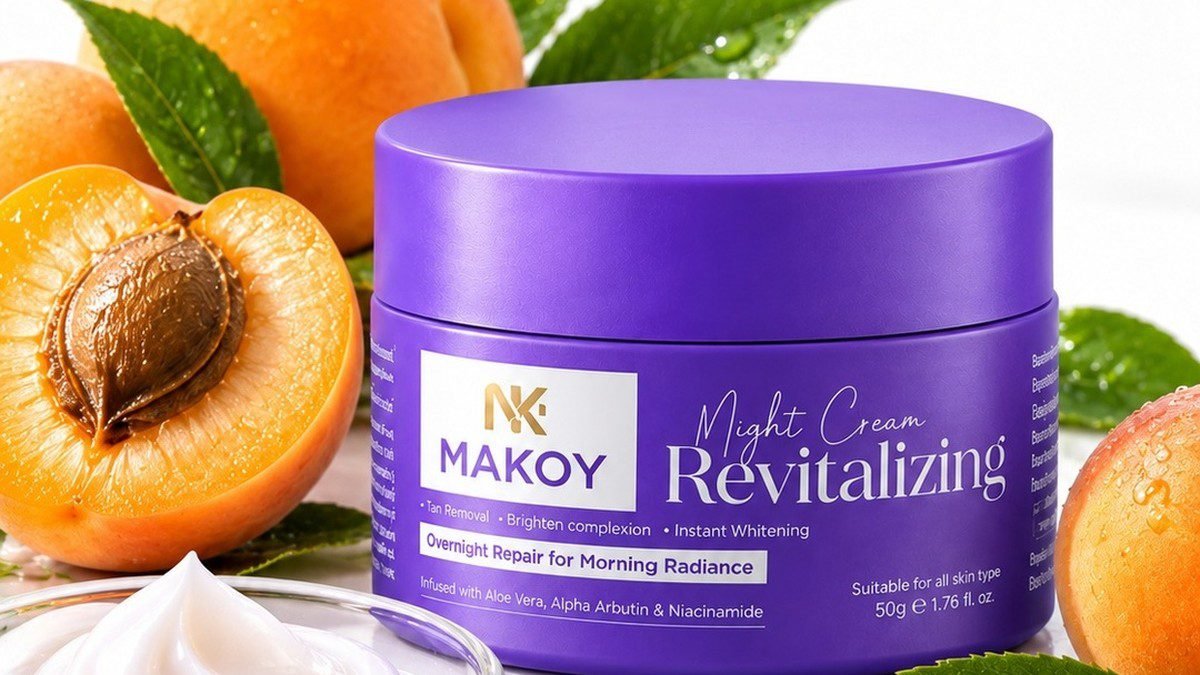
When you choose a night cream for uneven skin tone, look at the ingredient list rather than the claims on the front. These are the ingredients in MAKOY Revitalizing Night Cream and what each one does:
- Alpha Arbutin: a well-known ingredient used to target the look of dark spots and patchy areas.
- Niacinamide: a form of vitamin B3 that helps skin look smoother, brighter and more even, and supports the skin barrier.
- Ceramide Complex: ceramides are a natural part of the skin barrier; they help lock in moisture so skin stays soft through dry winter nights.
- Aloe Vera and Allantoin: soothe and calm the skin, which matters when dryness or friction is part of the problem.
- Vitamin E and Apricot Oil: nourish the skin and leave it feeling soft by morning.
The cream is paraben-free and suitable for all skin types. It has a light, non-greasy texture, so it sits comfortably on the skin overnight without feeling heavy.
Daily habits that make a difference
- Do not pick at pimples. Picking makes dark marks deeper and longer-lasting.
- Keep showers warm, not hot. Very hot water strips natural oils and leaves skin dull.
- Moisturise your body too. Dry elbows, knees and hands can look darker and rough. Our guide on choosing a body lotion for dry skin covers this in detail.
- Skip harsh scrubs. Over-scrubbing irritates the skin and can make patches worse.
- Sleep and water. Tired, dehydrated skin always looks duller and less even.
Frequently asked questions
How long does it take to see a difference in uneven skin tone?
Most people need four to six weeks of regular use to notice that their skin looks more even. Older or deeper marks can take longer. Consistency matters more than using a large amount.
Can I use a night cream for uneven tone every night?
Yes. A night cream with niacinamide, alpha arbutin and ceramides is designed for daily use. If you have very sensitive skin, start every other night for the first week.
Is uneven skin tone the same as tan?
Not exactly. A tan is a darkening caused by recent sun exposure, while uneven tone includes older dark spots, acne marks and patchy areas. Sun protection helps both.
Do I still need sunscreen if I use a night cream?
Yes. Sunscreen protects your skin during the day; a night cream supports it while you sleep. They work best together.
When should I see a dermatologist?
See a dermatologist if patches spread quickly, itch, change in colour or shape, or do not respond to a gentle routine after a couple of months.
The bottom line
Uneven skin tone is common, and it usually comes down to sun, old breakouts, dryness and friction. You do not need a complicated routine to help your skin look more even. Cleanse gently, use a nourishing night cream with proven ingredients like alpha arbutin and niacinamide, protect your skin from the sun every morning, and give it time.
If you are looking for a simple place to start, MAKOY Revitalizing Night Cream combines alpha arbutin, niacinamide, ceramides, aloe vera, vitamin E and apricot oil in one light overnight cream. Explore it, along with the rest of our skincare range, at makoy.in.






Leave a Reply